
The phrase "AI governance platform" now covers products that do very different jobs. Some catalog every AI system and route it through approval workflows; others monitor models in production or enforce runtime guardrails.
Picking the wrong category wastes budget on a gap you didn't have.
I reviewed the field and shortlisted the 11 best AI governance platforms, focusing on the true platform layer: the centralized system of record that links AI inventory, risk assessment, policy enforcement, and audit evidence across an organization.
I evaluated each against Gartner's definition and how it performs on real regulatory workflows like the EU AI Act and NIST AI RMF.
Here's the ranked list, what each platform governs, honest pros and cons, pricing, and who it fits. For a broader look at monitoring and observability tools, see our companion AI governance tools comparison.
11 best AI governance platforms: TL;DR
- Credo AI: Best overall enterprise governance control plane
- OneTrust AI Governance: Best for privacy and GRC-led organizations
- IBM watsonx.governance: Best for hybrid cloud with transparent pricing
- Collibra AI Governance: Best for AI governance built on a data catalog
- Holistic AI: Best for automated risk and bias testing depth
- Dataiku: Best for end-to-end build and govern in one platform
- Superblocks: Best for governing AI-built internal apps
- DataRobot: Best for MLOps and governance under one vendor
- Trustible: Best for purpose-built AI governance workflows
- Fiddler AI: Best for observability and runtime guardrails
- Arize AI: Best for LLM observability with an open-source option
How I evaluated these AI governance platforms
I assessed each platform against the jobs a central governance system performs, drawing on Gartner's market definition, vendor documentation, and verified reviews on G2 and Gartner Peer Insights.
I focused on the control-plane layer over pure observability, since that's what the "platform" label means in 2026.
- Policy and inventory: Whether it maintains a live registry of AI systems and maps them to the EU AI Act, NIST AI RMF, and ISO 42001.
- Workflow automation: How well it automates intake, risk assessment, approvals, and audit-ready evidence.
- Runtime controls: Whether it enforces guardrails on live AI, or documents policy for others to enforce.
- Integration fit: How it connects to existing GRC, identity, and MLOps stacks.
- Enterprise readiness: RBAC, SSO, deployment options, and regulated-industry track record.
This helped me separate true governance platforms from narrower point tools, since most enterprises need a control plane plus one or two specialized layers.
11 best AI governance platforms: quick comparison
Pricing correct as of July 2026. Verify with vendor.
The 11 best AI governance platforms
1. Credo AI
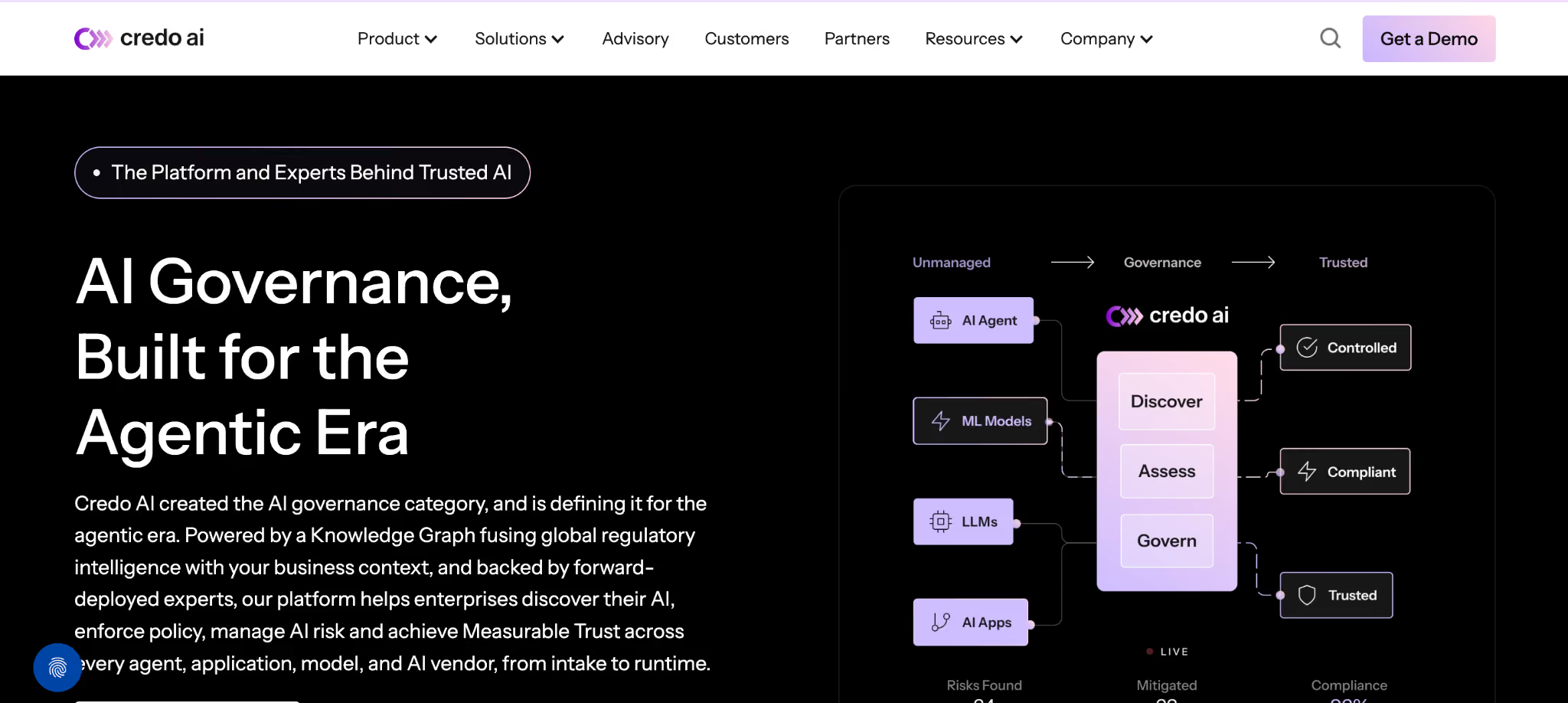
Credo AI is the best overall AI governance platform for enterprises that need a central control plane across every AI system.
It pairs an AI use-case registry with regulation-mapped assessments and a policy engine that coordinates review, approval, and monitoring. Forrester's Wave named it a Leader, Gartner's Magic Quadrant places it in the Visionary quadrant, and it has the widest enterprise deployment here.
Key features
- AI registry: Catalogs models, applications, and agents in one system of record.
- Policy packs: Pre-built control sets mapped to the EU AI Act, NIST AI RMF, and ISO 42001.
- Evidence automation: Generates audit-ready documentation and risk assessments.
Pros
- ✅ The default choice when governance scales across business units
- ✅ Deep regulatory coverage and evidence generation
- ✅ Strong analyst recognition and enterprise references
Cons
- ❌ Built for GRC teams to operate, with engineer self-serve out of scope
- ❌ Enterprise-only with no public pricing or self-serve tier
What Users Say
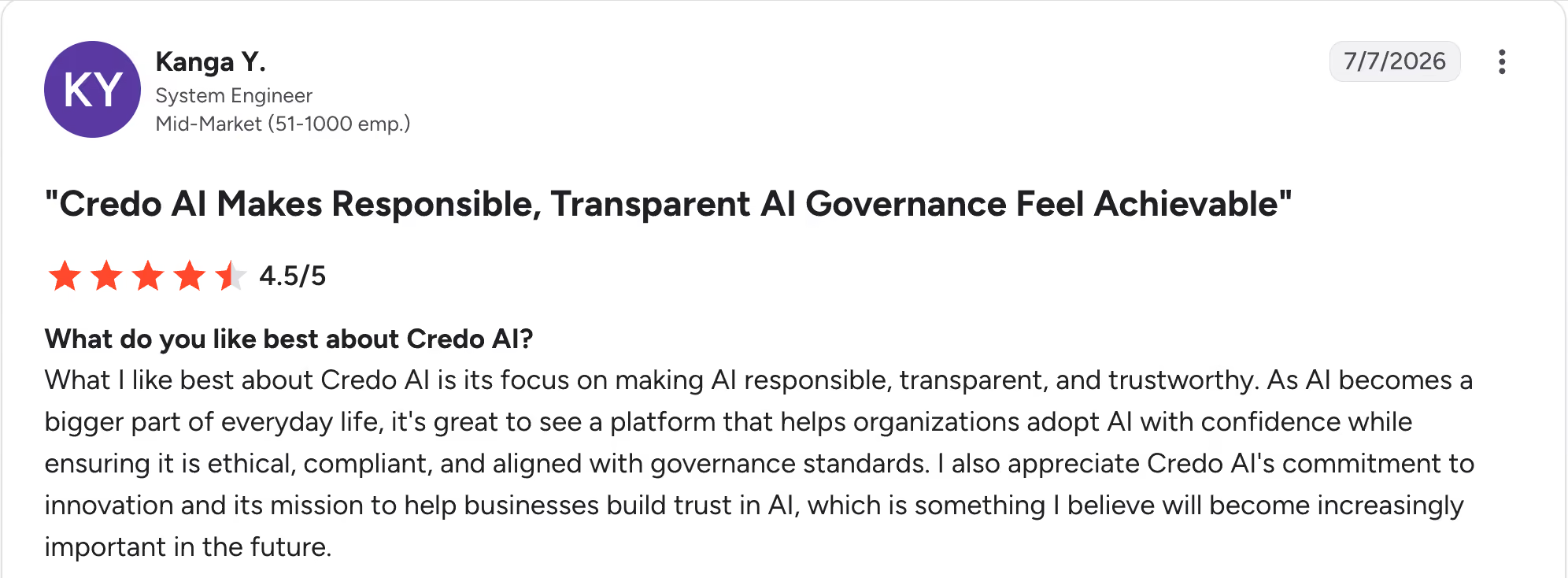
“What I like best about Credo AI is its focus on making AI responsible, transparent, and trustworthy.” Kanga Y, G2

“It governs and documents, but does not enforce control at runtime. Pricing is deep.” Verified User, Gartner
Pricing
Credo AI uses custom enterprise pricing with no self-serve tier. See Credo AI's site to request a demo.
Bottom line
If your program has to coordinate policy across divisions and produce evidence auditors accept, Credo AI is the safest default. For an engineering team that only wants governance-as-code in its pipeline, it's more platform than the job calls for.
2. OneTrust AI Governance
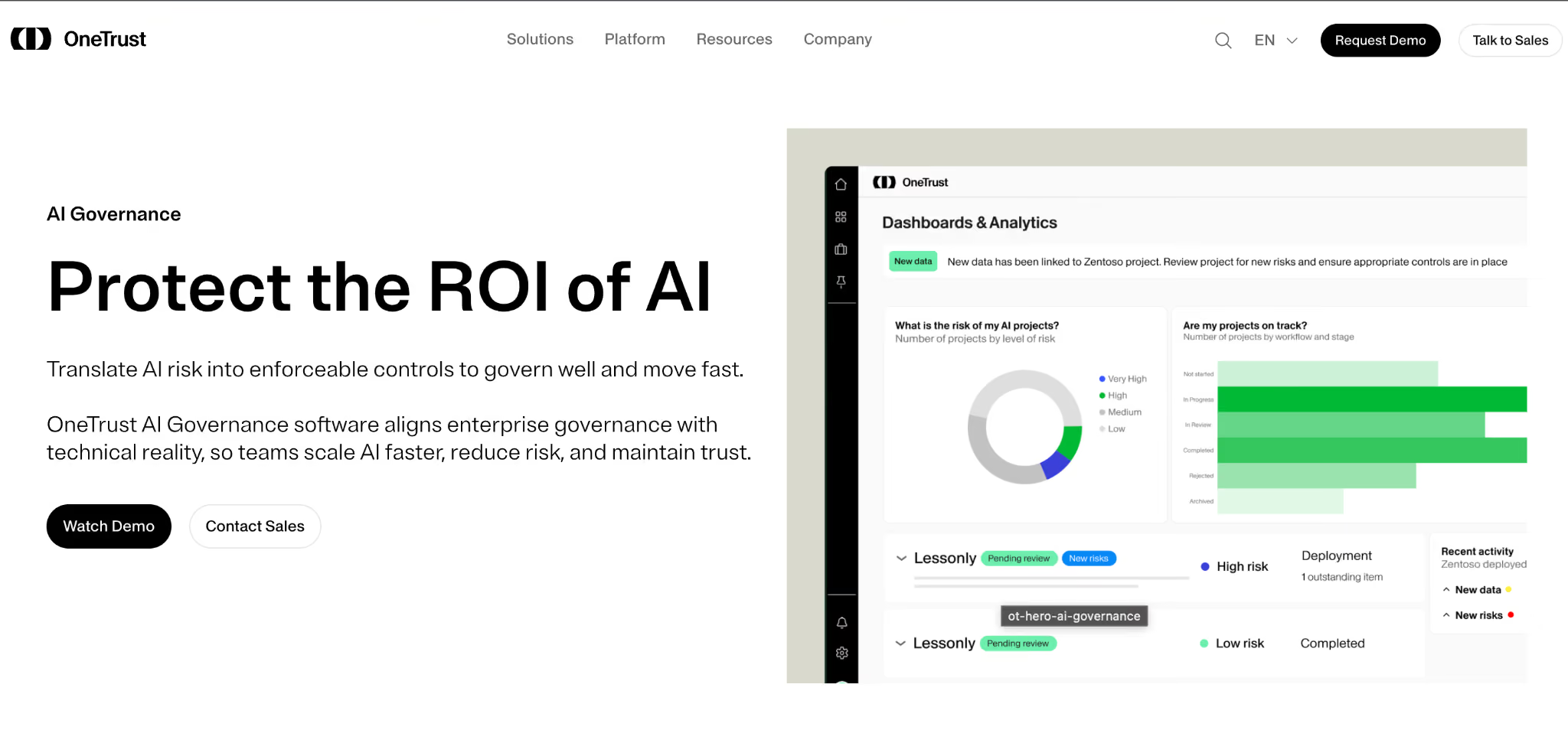
OneTrust AI Governance is the best platform for organizations that already run their privacy and GRC program on OneTrust.
It centralizes AI inventory, risk assessment, policy enforcement, and monitoring, extending the privacy platform many teams already use. Runtime guardrails like prompt filtering and data redaction round it out.
Key features
- Unified GRC: Ties AI governance into existing privacy and risk workflows.
- Approval automation: Handles attestations, approvals, and audit reporting.
- Runtime guardrails: Prompt filtering and data redaction on live AI.
Pros
- ✅ Natural fit if you already run OneTrust for privacy
- ✅ Broad regulatory and vendor-risk coverage
- ✅ Connected oversight across data, models, and agents
Cons
- ❌ Most value depends on already using the OneTrust platform
- ❌ Better suited to privacy and legal teams than engineering
What Users Say
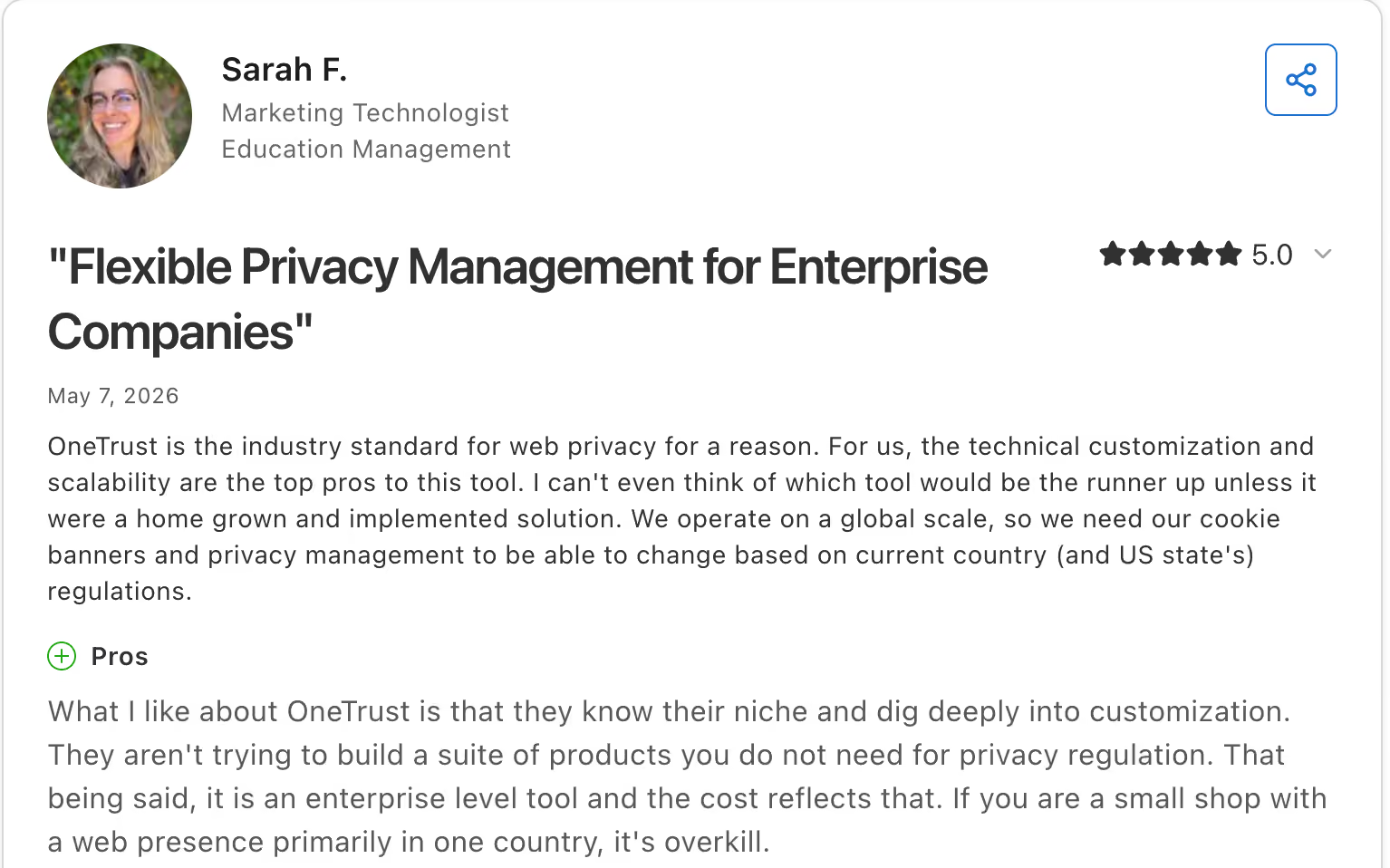
“What I like about OneTrust is that they know their niche and dig deeply into customization.” Sarah F, Capterra

“I found OneTrust challenging at times because its extensive feature set can feel overwhelming to navigate.” Brittany P, Capterra
Pricing
OneTrust AI Governance uses custom pricing. See OneTrust's site for a quote.
Bottom line
OneTrust earns its place with teams already running its privacy platform, where AI governance becomes one more module rather than a new system to stand up. Buy it for that continuity; look elsewhere if you'd be adopting the whole suite just for the AI piece.
3. IBM watsonx.governance
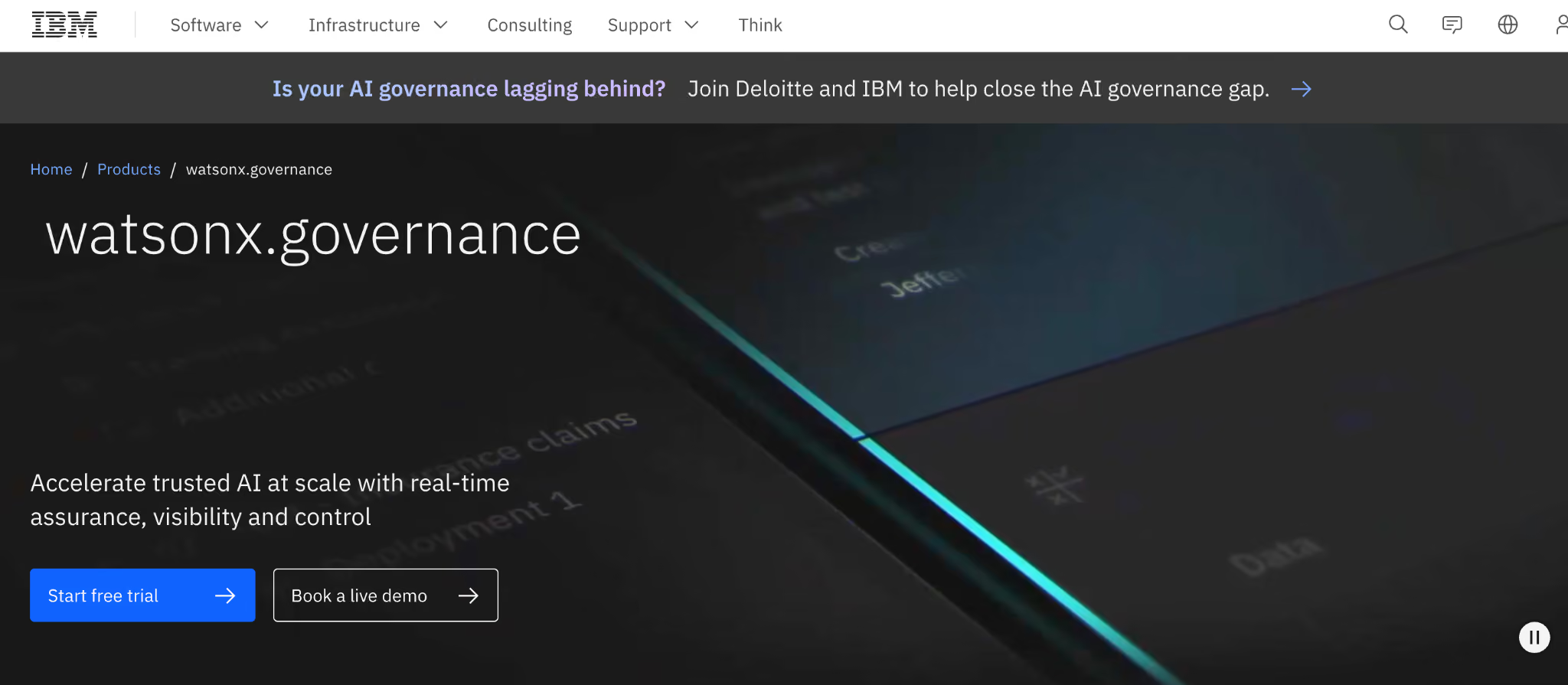
IBM watsonx.governance is the best AI governance platform for hybrid-cloud enterprises that want transparent pricing.
It's the rare enterprise platform with public SaaS pricing and a free trial, pairing model governance with IBM's regulated-industry heritage. It monitors fairness, drift, and explainability with AI factsheets across environments.
Key features
- AI factsheets: Automated documentation of model lineage and metadata.
- Multi-cloud governance: Governs models across AWS, Azure, and IBM.
- Bias and drift monitoring: Built-in fairness and performance tracking.
Pros
- ✅ Transparent public SaaS pricing, rare in this category
- ✅ Free trial for evaluation
- ✅ Strong fit for regulated, hybrid-cloud enterprises
Cons
- ❌ Best value inside the IBM stack
- ❌ Setup can be complex outside existing IBM infrastructure
What Users Say
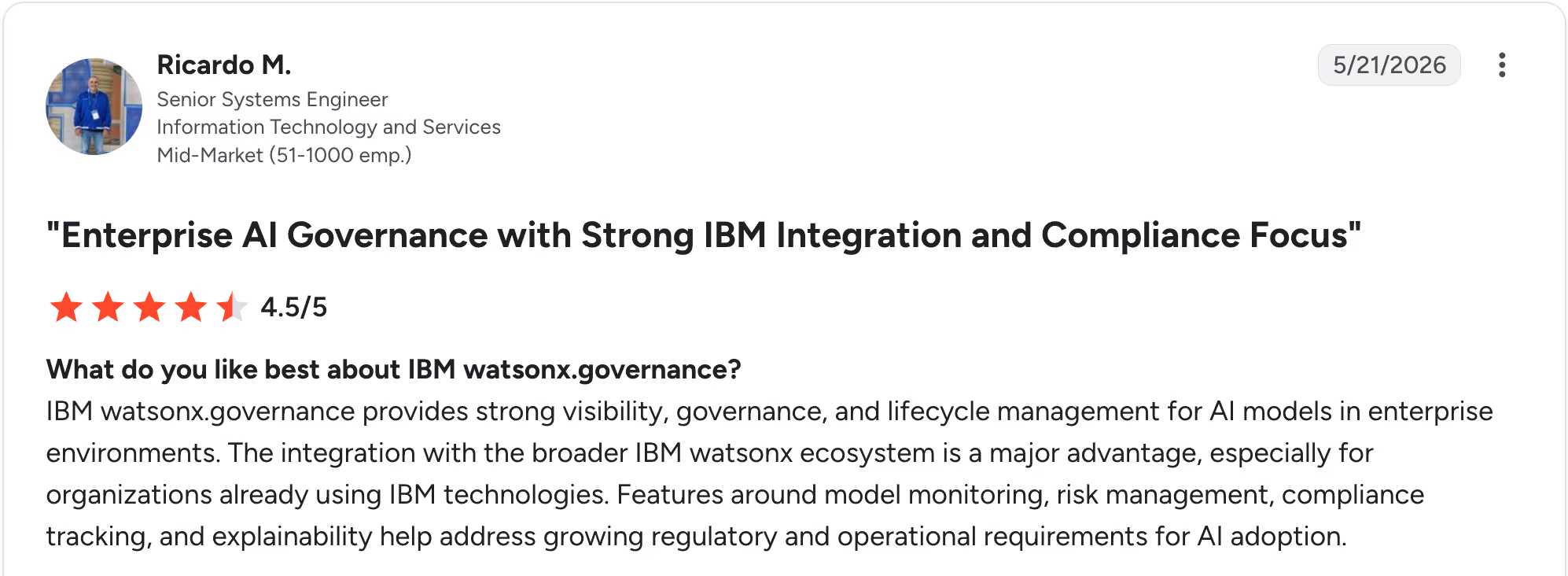
“IBM watsonx.governance provides strong visibility, governance, and lifecycle management for AI models in enterprise environments.” Ricardo M, G2

“The platform has many features, so it takes some time to fully understand and use efficiently at first.” Mansi S, G2
Pricing
IBM watsonx.governance offers public SaaS pricing from about $0.60 per resource unit, with a free trial. See IBM's pricing page for details.
Bottom line
Two things pull buyers toward IBM watsonx.governance: published pricing and genuine hybrid-cloud reach. Both advantages fade if your models don't already live in the IBM stack, so weigh them against your existing footprint.
4. Collibra AI Governance
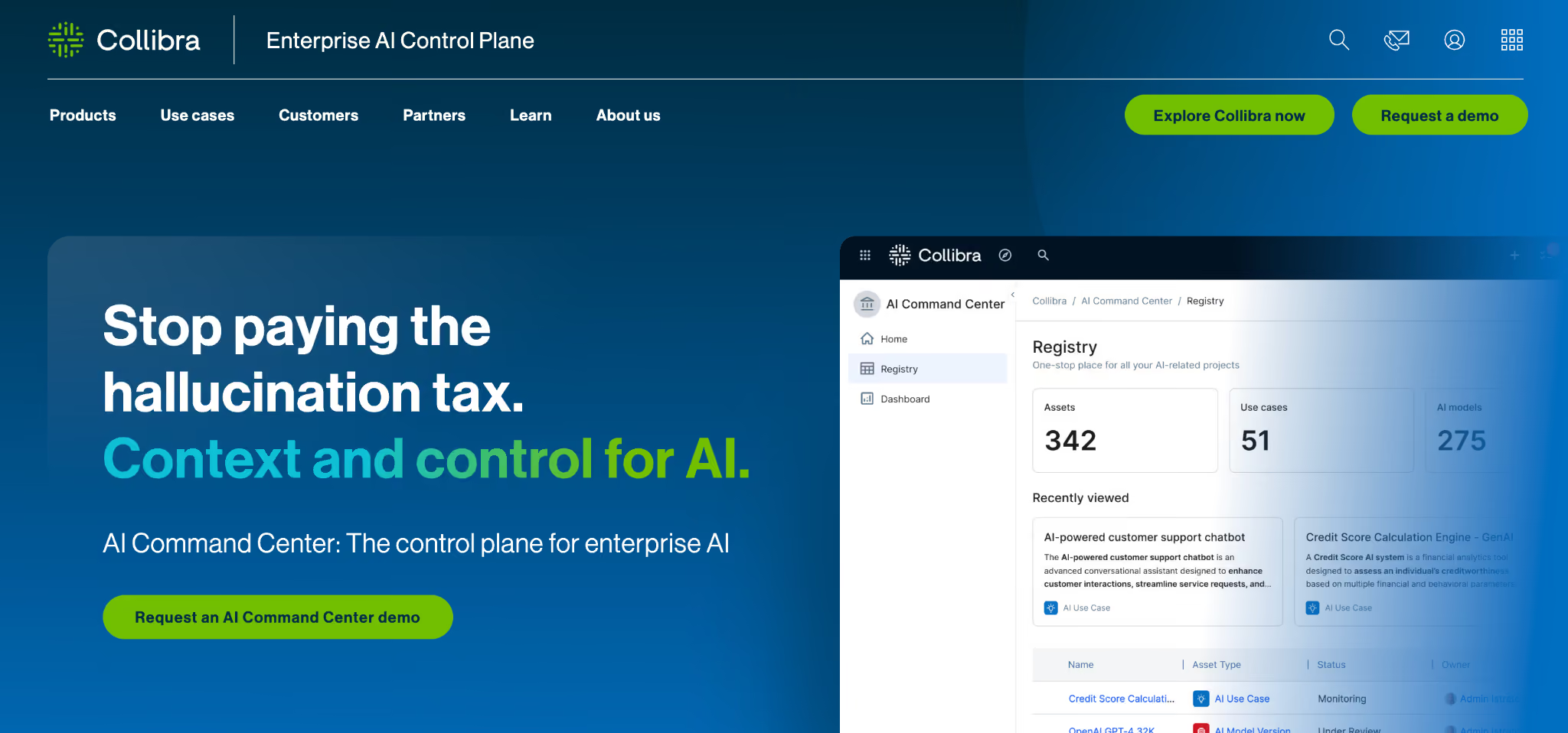
Collibra is the best AI governance platform for enterprises that want AI governance built on a mature data catalog.
It extends Collibra's data intelligence platform with AI governance, linking every AI project to the governed data that feeds it. A Gartner Leader in data governance, it fits organizations that already treat data as a managed asset.
Its 2026 Databricks partnership deepened agentic-AI context.
Key features
- Data-to-AI lineage: Links AI models to the governed datasets and quality checks behind them.
- AI project registry: Documents AI use cases with risk ratings and review workflows.
- Policy and privacy: Access controls and compliance mapping across data and AI.
Pros
- ✅ Ties AI governance to a proven data catalog and lineage
- ✅ Strong fit for data-mature, regulated enterprises
- ✅ Gartner Leader with deep connector breadth
Cons
- ❌ Full value needs adoption of the wider Collibra platform
- ❌ Implementations run long and cost more than planned
What Users Say
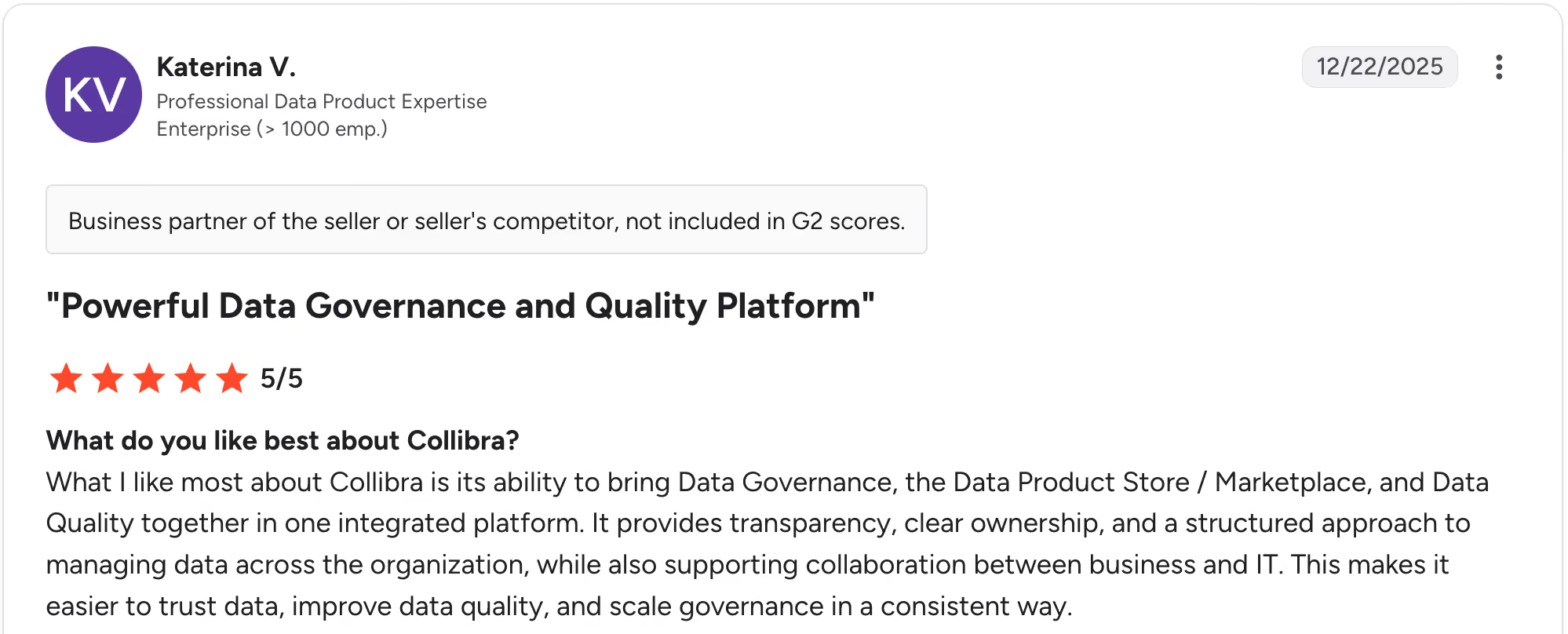
“What I like most about Collibra is its ability to bring Data Governance, the Data Product Store / Marketplace, and Data Quality together in one integrated platform.” Katerina V, G2

“The things I don’t like about Collibra are the pricing and the adoption challenges.” Frank L, G2
Pricing
Collibra uses custom enterprise pricing, with third-party estimates from about $170K per year. See Collibra's site for a quote.
Bottom line
Collibra's AI governance only pays off if you already run its data catalog, since it builds directly on that lineage. Without the underlying data-governance layer, you'd be buying a heavier foundation than the AI features alone justify.
5. Holistic AI
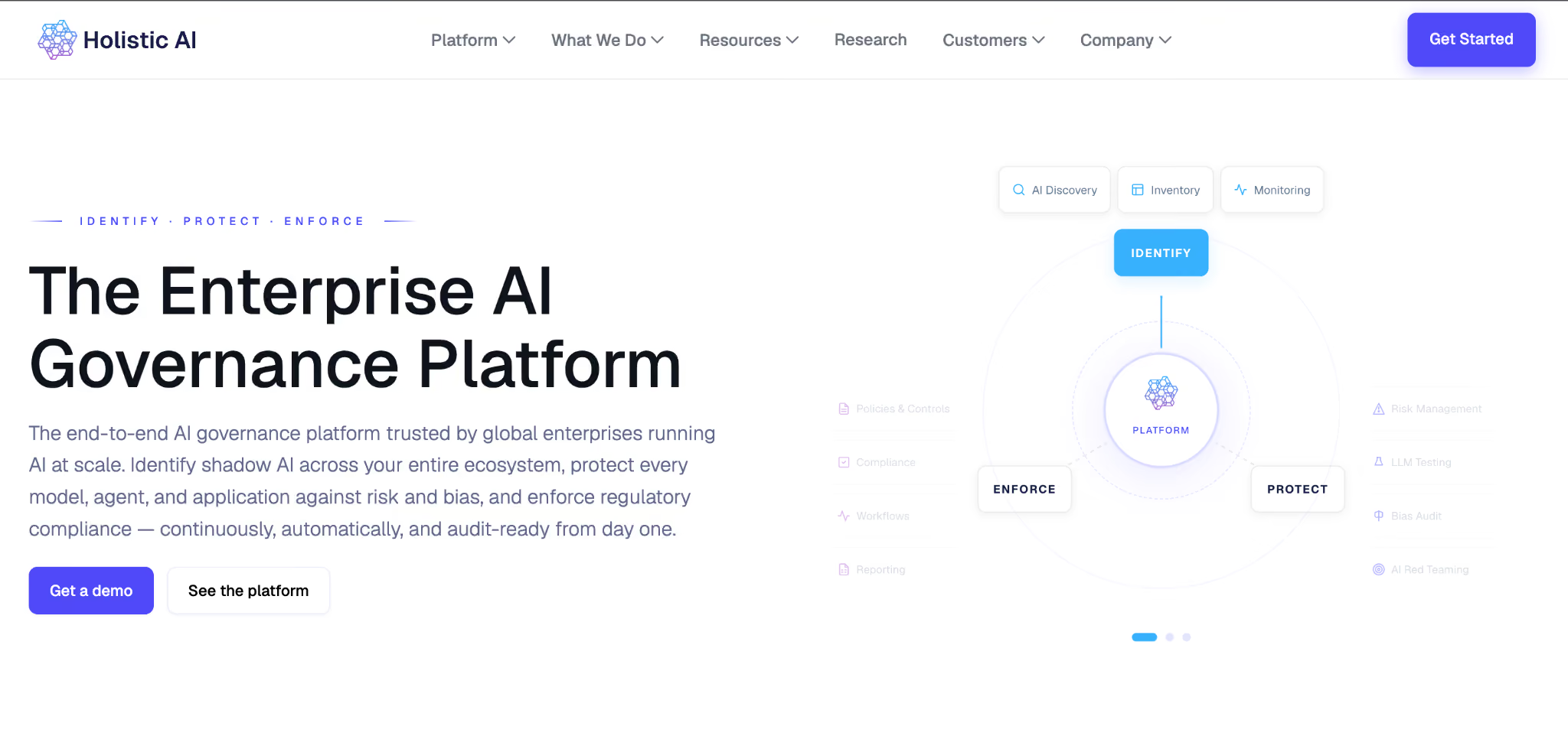
Holistic AI is the best AI governance platform for teams that need automated technical testing alongside governance.
Its discover-protect-enforce architecture covers shadow AI discovery, automated testing for bias and drift, and policy-as-code governance. An April 2026 update added runtime agentic monitoring.
Key features
- Automated testing: Bias, hallucination, toxicity, drift, and adversarial testing.
- Shadow AI discovery: Surfaces unauthorized AI across the organization.
- Policy-as-code: Enforces governance rules programmatically.
Pros
- ✅ Deepest automated technical testing of the platforms here
- ✅ Combines discovery, testing, and enforcement
- ✅ Strong regulatory coverage
Cons
- ❌ Full value needs governance expertise to operate
- ❌ No public pricing
What Users Say

“Strong focus on regulatory compliance. Good monitoring of models and risk assessment. Audit-ready.” Verified User, Gartner

“Not the easiest implementation and onboarding process. Takes a lot of lifting and support.” Verified User, Gartner
Pricing
Holistic AI uses custom enterprise pricing. See Holistic AI's site to book a demo.
Bottom line
Holistic AI is built around automated bias, robustness, and risk testing, so it rewards programs where evaluation is the main event. If all you need is an inventory and a few assessments, most of its depth goes unused.
6. Dataiku
Dataiku is the best AI governance platform for teams that want to build and govern models and agents in one end-to-end platform.
It provides no-, low-, and full-code development with governance embedded across the AI lifecycle, so teams track performance, cost, and risk without a separate tool. Its recent agentic framework extends that to agents.
Key features
- End-to-end platform: Build, deploy, and govern analytics, models, and agents together.
- Embedded governance: Tracks performance, cost, and risk to keep systems auditable.
- Flexible development: No-code, low-code, and full-code (Python, R, SQL) in one place.
Pros
- ✅ Unifies model building and governance in one platform
- ✅ Serves both technical and business users
- ✅ Works across any cloud without lock-in
Cons
- ❌ Governance is one part of a broad platform, so it's less of a standalone control plane
- ❌ Full value needs adoption of the wider Dataiku platform
What Users Say
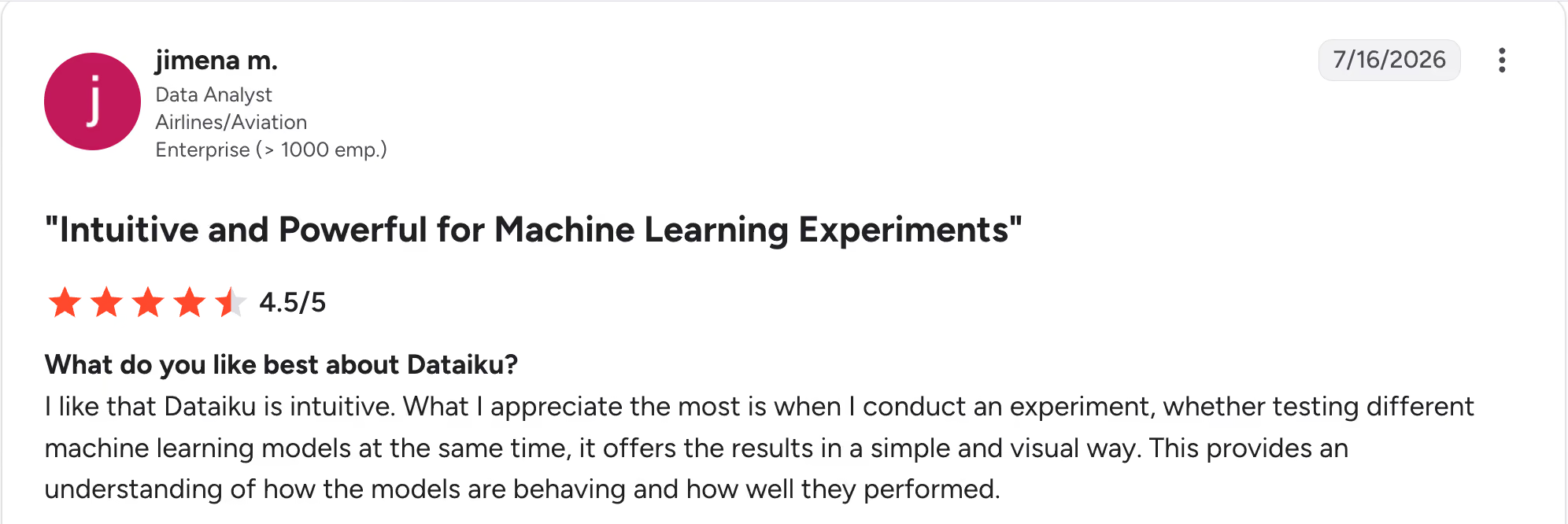
“What I appreciate the most is that when I conduct an experiment, whether testing different machine learning models at the same time, it offers the results in a simple and visual way.” Jimena M, G2

“The interface for selecting fields of a datasource or maybe creating calculated fields should be simpler.” Adalberto G, G2
Pricing
Dataiku uses custom enterprise pricing with a free edition for smaller teams. See Dataiku's site for a quote.
Bottom line
Dataiku appeals to teams that would rather build and govern models under one roof than stitch tools together. That same all-in-one design works against you if you want a neutral control plane sitting over a mix of existing platforms.
7. Superblocks
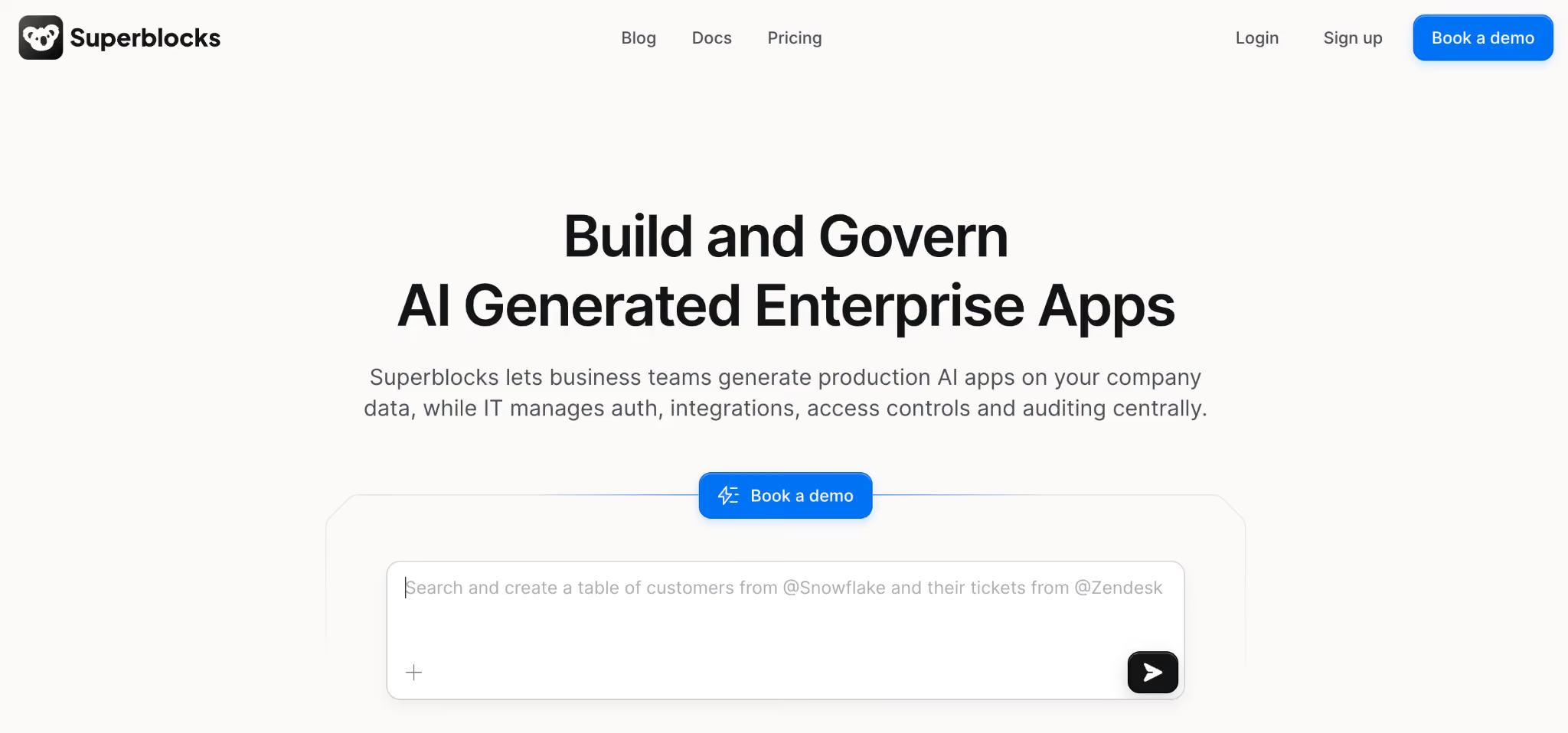
Superblocks is the best AI governance platform for governing the internal apps teams build with AI.
Most platforms here govern purchased models and third-party AI. Superblocks covers a different layer: the internal apps employees build with AI, often the least-governed AI in an organization.
Shadow AI is the new shadow IT. Its MCP makes every app, builder, and integration queryable.
Key features
- 🔍 Superblocks MCP: Query who built what, what data it touched, and who has access.
- 📊 Audit logs: Builds, queries, and integration access are captured with user attribution across the platform.
- 🛡️ Deterministic guardrails: RBAC, SSO, and secrets management enforced by the platform.
Pros
- ✅ Governs the AI-built apps other platforms miss entirely
- ✅ Enterprise access control and audit logs built in
- ✅ Hybrid deployment keeps data in your VPC
Cons
- ❌ Governs apps built on the platform, with third-party models and model monitoring out of scope
- ❌ Not a compliance-documentation or model-risk suite
What Users Say
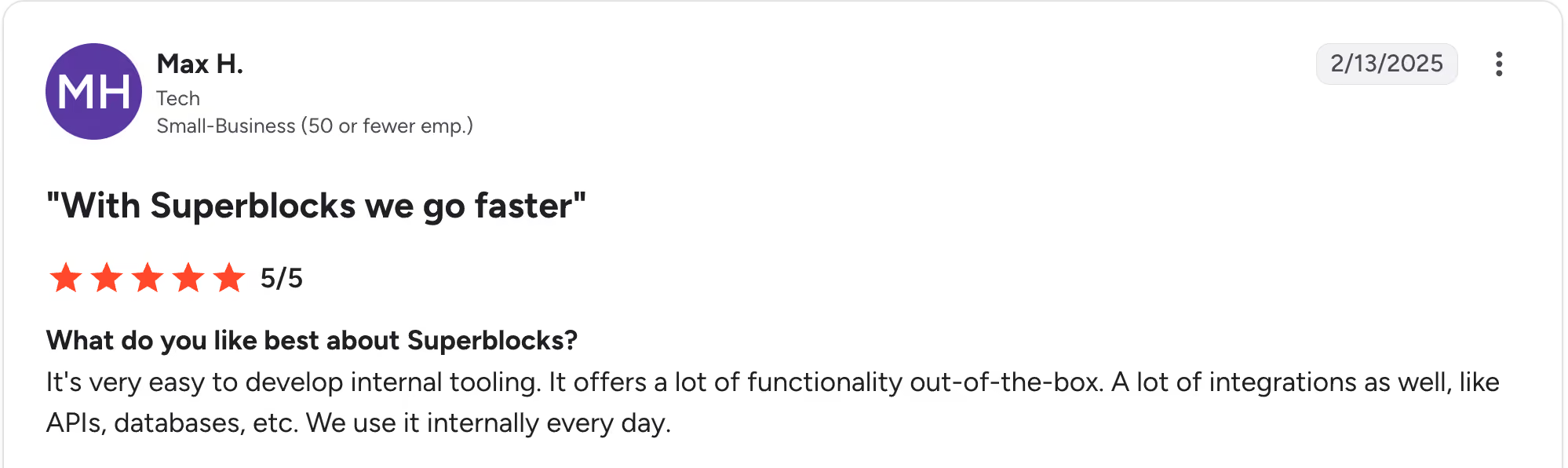
“It's very easy to develop internal tooling. It offers a lot of functionality out of the box.” Max H, G2

“There are some backend limitations, and components lack reusability across applications; also, it's still lacking diversity in its components offering.” Oscar C, G2
Pricing
Superblocks uses custom pricing based on builders, users, and deployment model. See Superblocks pricing or book a demo.
Bottom line
Superblocks is the answer to a problem the others barely touch: the internal apps employees build with AI, ungoverned. It handles that build layer, so run it alongside a model-governance platform if purchased AI is also in scope.
8. DataRobot
DataRobot is the best AI governance platform for teams that want MLOps and governance under one vendor.
It pairs automated machine learning with built-in governance, handling model building, documentation, deployment, monitoring, and risk mitigation end-to-end. It suits teams that want speed and governance together.
Key features
- Automated documentation: Generates compliance reports, even for external models.
- Auditability: Tracks feature, model, and lineage metadata with prediction logs.
- LLM evaluation: Tests generative models for risk and hallucination.
Pros
- ✅ Unifies predictive and generative AI governance
- ✅ Deploy fast while staying compliant
- ✅ Supports third-party and custom models
Cons
- ❌ Limited flexibility outside its platform
- ❌ Requires platform onboarding and configuration
What Users Say
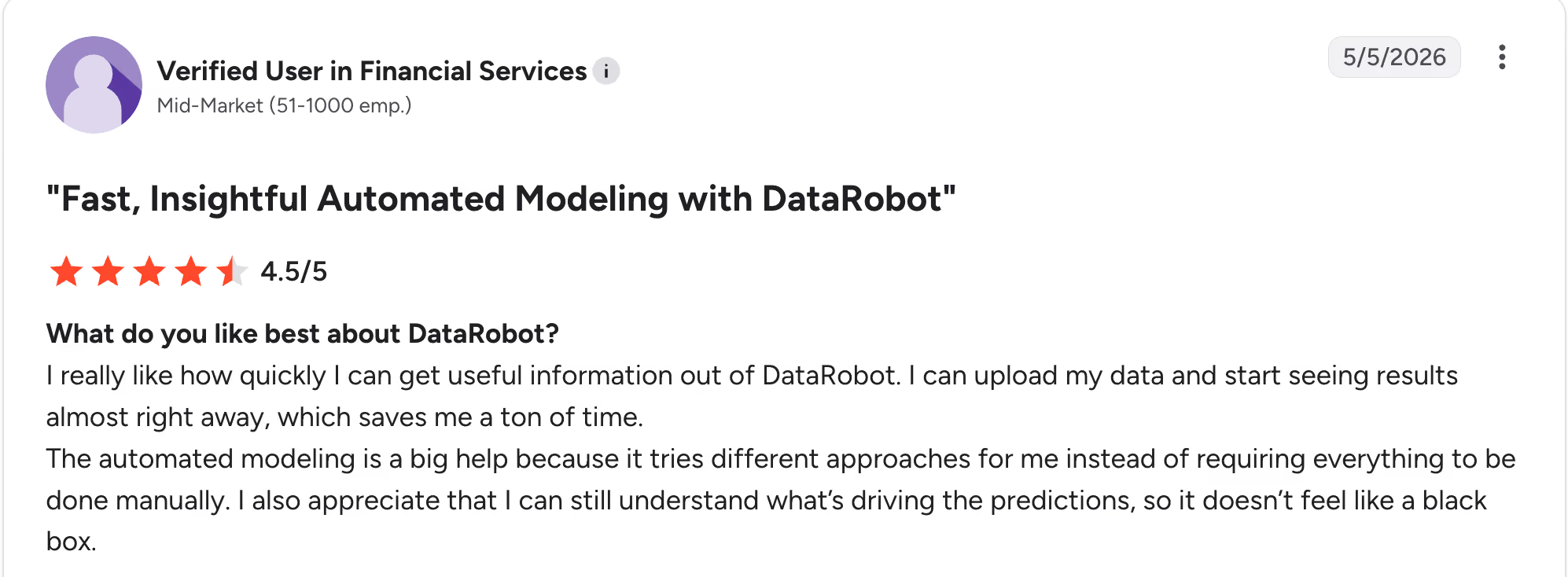
“I really like how quickly I can get useful information out of DataRobot. I can upload my data and start seeing results almost right away, which saves me a ton of time.” Verified User, G2

“I find the interface can sometimes feel overly dense and cluttered, which makes it tough for new users like me to figure out exactly where to click when navigating the platform.” Verified User, G2
Pricing
DataRobot uses custom pricing with a free trial. See DataRobot's site for a quote.
Bottom line
DataRobot suits shops that already rely on it for MLOps and want governance to ride the same rails. The catch is the same as any single-vendor bet: it won't act as a neutral overseer of models trained and served elsewhere.
9. Trustible
Trustible is the best AI governance platform for teams that want purpose-built, audit-ready governance workflows.
Built specifically for AI governance professionals, it orchestrates use-case intake, risk assessments, and policy management around a centralized AI inventory. Its attributes-based risk scoring recommends governance next steps automatically.
Key features
- AI inventory: Centralized registry of AI use cases, models, and vendors.
- Risk scoring engine: Attributes-based scoring that recommends governance next steps.
- Broad framework mapping: Compliance across 10+ frameworks including the EU AI Act, NIST AI RMF, and ISO 42001.
Pros
- ✅ Purpose-built for AI governance from the ground up
- ✅ Curated risk taxonomies and AI-assisted vendor analysis
- ✅ Unlimited use cases, models, and vendors on both tiers
Cons
- ❌ Built for governance professionals over data science or MLOps teams
- ❌ Newer platform with a smaller footprint than the incumbents
What Users Say
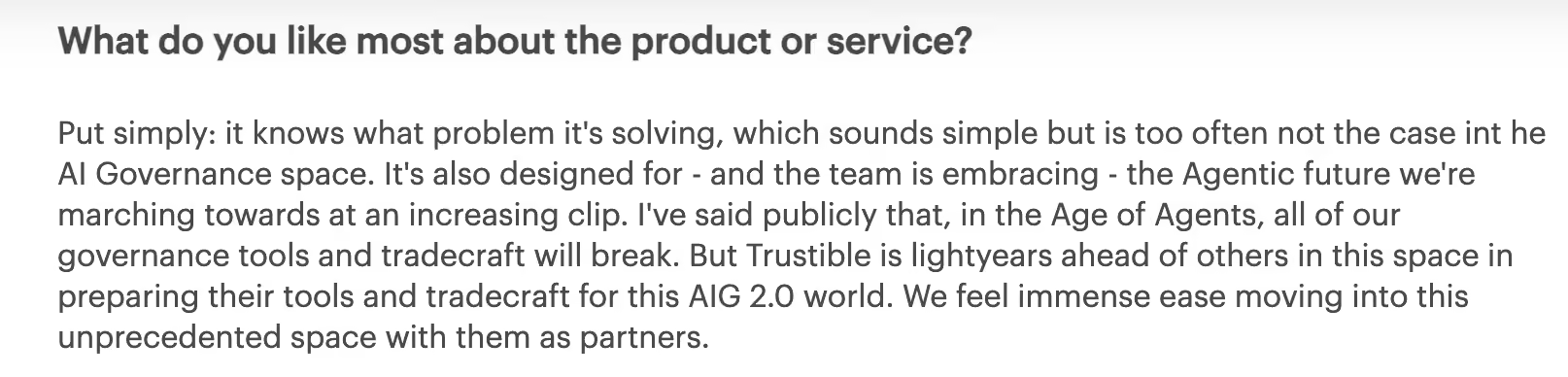
“Put simply: it knows what problem it's solving, which sounds simple but is too often not the case in the AI Governance space.” Verified User, Gartner

“Customization is powerful but also takes time to navigate and understand the necessary parts for our specific workflows.” Verified User, Gartner
Pricing
Trustible uses annual subscription pricing in Standard and Enterprise tiers, both with unlimited use cases. See Trustible's site for a quote.
Bottom line
Trustible wins on focus: a workflow-driven governance tool without the weight of an enterprise suite. That lean scope means you'll bolt on a specialized layer separately if model monitoring or data lineage also matter to you.
10. Fiddler AI
Fiddler AI is the best AI governance platform when your priority is observability and runtime guardrails.
It provides real-time monitoring, explainability, and bias detection for ML and LLMs, blocking unsafe responses before they reach users. Its heritage is deep model observability.
Key features
- Trust scores: Calibrated metrics for hallucination, faithfulness, and safety.
- Runtime guardrails: Blocks non-compliant LLM responses live.
- Unified observability: Monitors drift, bias, and performance for ML and LLMs.
Pros
- ✅ Deep, mature observability for ML and LLMs
- ✅ Real-time guardrail enforcement
- ✅ SaaS, VPC, or GovCloud deployment
Cons
- ❌ Observability-first, lighter on policy documentation
- ❌Enterprise tiers are quote-based
What Users Say
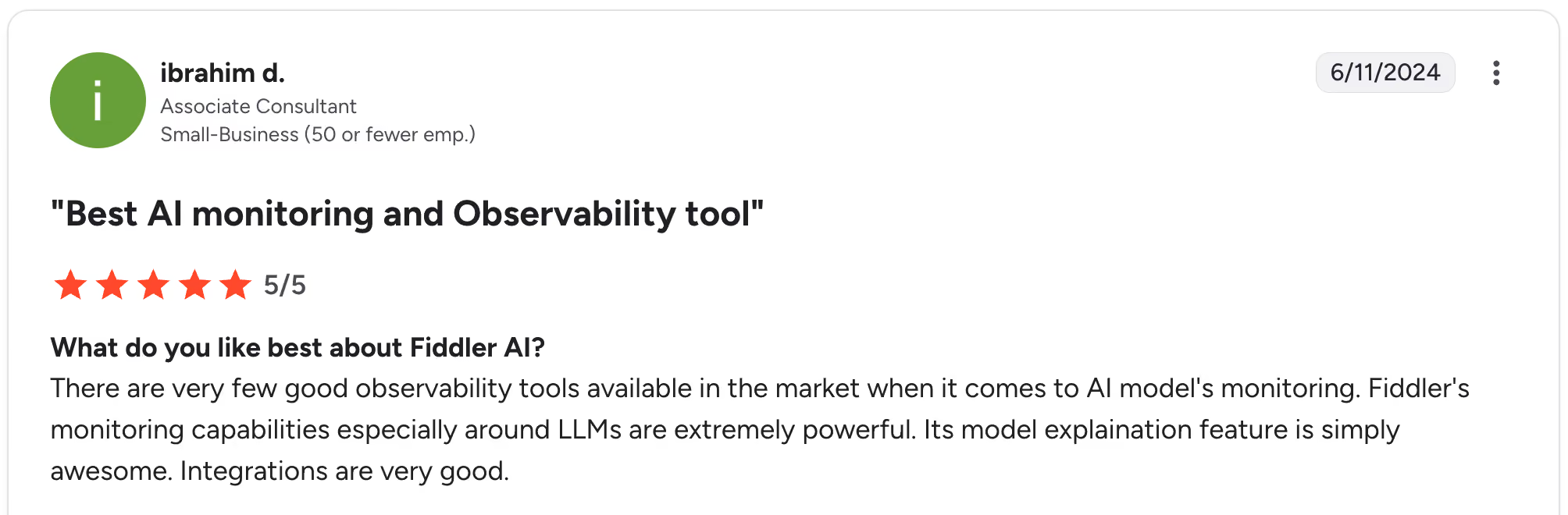
“There are very few good observability tools available in the market when it comes to AI models' monitoring. Fiddler's monitoring capabilities, especially around LLMs, are extremely powerful.” Ibrahim D, G2

“I wish there were a free version with a subset of features.” Verified User, G2.
Pricing
Fiddler AI offers a free plan and usage-based Developer pricing starting at $0.002 per trace, with a quote-based Enterprise tier above that. See Fiddler AI's pricing for details.
Bottom line
Fiddler's strength is watching models in production and catching them at runtime, so reach for it when live monitoring is the priority. It's lighter on documentation and policy, so most teams run it beneath a governance layer that produces the audit trail.
11. Arize AI
Arize AI is the best AI governance platform when your priority is LLM and agent observability with an open-source option.
Built on OpenTelemetry, it provides tracing, evaluation, and production monitoring for ML and LLM systems. Its open-source Phoenix tool is free to self-host, while Arize AX adds enterprise features. Customers include DoorDash, Uber, and Reddit.
Key features
- Open-source Phoenix: Free, self-hostable tracing and evaluation on open standards.
- LLM-as-a-judge evals: Automated scoring for correctness, faithfulness, and safety.
- Agent monitoring: Traces multi-step agent workflows, tool calls, and token cost.
Pros
- ✅ Free open-source tier for teams starting out
- ✅ Deep, vendor-agnostic LLM and agent observability
- ✅ Proven at high production volume
Cons
- ❌ Observability and evals over policy documentation
- ❌ Enterprise features and support need the paid AX tier
What Users Say
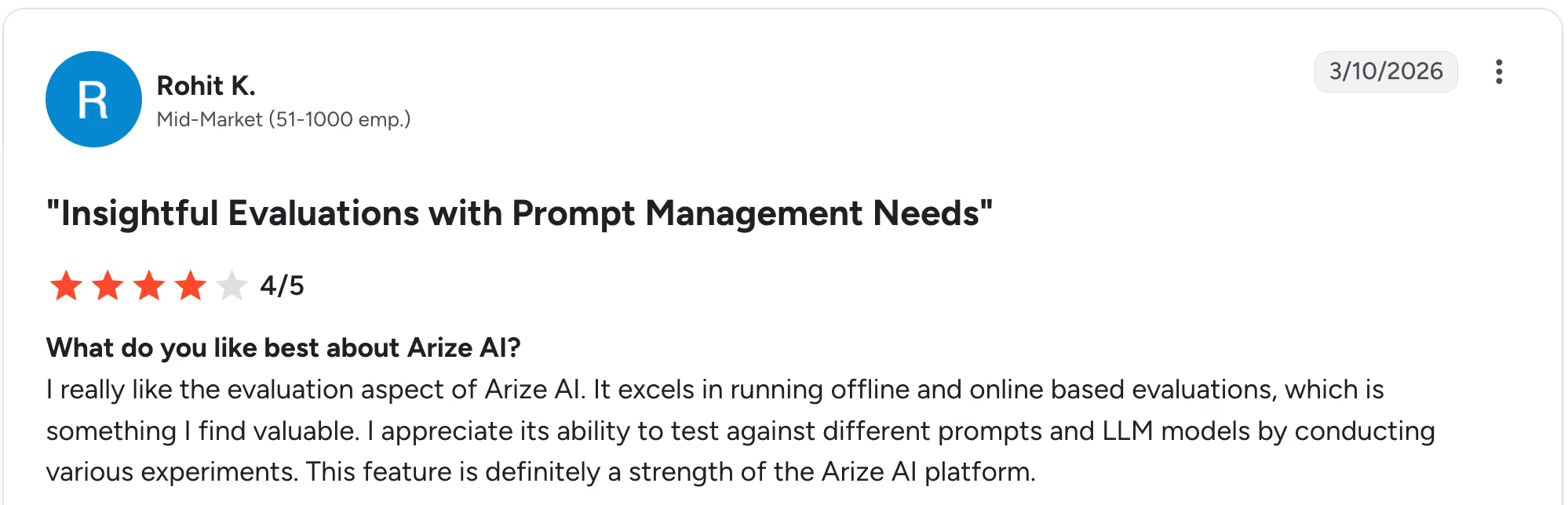
“I really like the evaluation aspect of Arize AI. It excels in running offline and online-based evaluations, which is something I find valuable.” Rohit K, G2

“It currently seems restricted to APIs with API keys, and it would be good to have other ways of connecting elements.” Yev K, G2
Pricing
Arize AX has three tiers: AX Free (25k spans/month), AX Pro at $50/month (50k spans, 30-day retention), and AX Enterprise at custom pricing. Phoenix, its open-source layer, is separately free. See Arize pricing for details.
Bottom line
Arize is worth a look when LLM observability and evaluation top your list, and its free tier lets you start without a purchase order. Just don't expect it to stand in for a compliance system of record; that evidence has to come from a governance platform elsewhere in your stack.
Which AI governance platform should you choose?
The right platform depends on which layer of governance is your biggest gap, since most enterprises combine a control plane with one or two specialized tools.
Choose Credo AI, OneTrust, IBM, or Collibra if you:
- Need a central control plane with regulatory evidence.
- Are led by legal, risk, or compliance teams.
Choose Holistic AI, Trustible, Fiddler, or Arize if you:
- Need automated testing, purpose-built governance workflows, or runtime observability.
- Govern live models in production.
Choose Superblocks if you:
- Worry most about the ungoverned apps teams build with AI.
- Need audit logs and access control at the app layer.
Skip a dedicated platform if you:
- Run only a couple of low-risk models you can govern with existing GRC tooling.
Final verdict
For most enterprises, Credo AI is the strongest all-around control plane, with OneTrust and IBM close behind for privacy-led and hybrid-cloud teams.
For focused workflows and production risk, Trustible, Holistic AI, and Fiddler lead on governance orchestration, testing, and observability.
And if your real exposure is the internal apps employees build with AI, Superblocks governs a layer these platforms don't touch. Most organizations combine a control plane with one specialized tool instead of expecting one platform to do everything.
Superblocks runs on a SOC 2 and HIPAA-aligned foundation. To govern the app layer these platforms miss, start with the Superblocks Quickstart Guide.
Or book a demo to see Clark AI generating governed internal apps in your own environment.
Frequently asked questions
What is an AI governance platform?
An AI governance platform is software that centralizes how an organization catalogs, assesses, approves, and monitors AI systems. It maintains a registry of models and agents, maps them to regulations like the EU AI Act, and generates audit-ready evidence across the lifecycle.
What is the best AI governance platform?
The best AI governance platform for most enterprises is Credo AI, the most-deployed control plane, a Forrester Wave Leader and Gartner Visionary. OneTrust suits privacy-led teams, IBM offers transparent pricing, and Superblocks governs AI-built internal apps.
What is the best API platform for AI governance?
The best API platform for AI governance enforces policy on live model and tool-call traffic through APIs, not just documenting it. Platforms like Fiddler and OneTrust apply runtime guardrails, while Superblocks governs the APIs that AI-built internal apps connect to.
How much does an AI governance platform cost?
Most AI governance platforms use custom enterprise pricing over public rates, so you request a quote based on AI systems and users. IBM watsonx.governance is a notable exception with public SaaS pricing from about $0.60 per resource unit and a free trial.
What is the difference between an AI governance platform and AI observability?
The main difference between an AI governance platform and AI observability is scope. A governance platform is a control plane for policy, inventory, and approvals across all AI, while observability tools like Fiddler monitor model behavior in production.
At Virgin Voyages, non-technical teams now build their own AI apps, with IT governance fully intact. The result: 15+ production apps, seven departments onboard, and zero dedicated frontend engineers.
At Matthews, a marketing manager with zero coding background built an app that auto-generates offering memorandums, cutting turnaround from days to hours. See how the brokerage is putting AI builders on every team, with full governance intact.


Stay tuned for updates
Get the latest Superblocks news and internal tooling market insights.
Request early access
Step 1 of 2
Request early access
Step 2 of 2

You’ve been added to the waitlist!
Book a demo to skip the waitlist
Thank you for your interest!
A member of our team will be in touch soon to schedule a demo.
production apps built
days to build them
semi-technical builders
traditional developers
high-impact solutions shipped
training to get builders productive
SQL experience required
See the full Virgin Voyages customer story, including the apps they built and how their teams use them.

"Those tools are great for proof of concept. But they don't connect well to existing enterprise data sources, and they don't have the governance guardrails that IT requires for production use."
Table of Contents
%20(1).png)

Multiple authors
12 AI Agent Deployment Best Practices [2026]
AI agent deployment best practices that move an agent from offline evals to full traffic in stages, with scoped tools and a way to revoke it mid-task.
%20(1).png)
%20(1).png)